This is precisely the reality for many small and micro caps:
...but on the stock market, they remain under the radar — too little visibility, hardly any analyst coverage, little liquidity.
Result: The share price often does not reflect the actual potential.
Bei COMMUNICATION PUBLIC AFFAIRS ändern wir das.
Wir bringen Ihre Equity Story dorthin, wo Investoren zuhören – in Research-Berichte, Finanzmedien, Roadshows und Analysten-Calls.
Our approach:
Conclusion: Greater visibility. More analysts. More investor interest.
If you want your company to stop being an insider tip, let's talk: schmitt@public-affairs-net.de
#SmallCap #MicroCap #InvestorRelations #AnalystCoverage #FinancialCommunication #CapitalMarkets #IR
🔴 "The next crisis is not a question of if, but when." How well is your company prepared for it?
In a world of multiple crisis hotspots, we at COMMUNICATION PUBLIC AFFAIRS see every day how economic and political developments are putting companies and their communications to the test.
2025 is not a normal year. The economic and geopolitical situation is unstable, social debate is polarized, and with each new round of regulation, the pressure on communications teams increases.
🧠 That's why communications managers today need to be prepared for the following crisis scenarios:
1️⃣ Energiepreise und Versorgungskrisen
2️⃣Lieferkettenunterbrechungen und Materialengpässe
3️⃣ Rezession, Inflation und Stellenabbau
4️⃣ Krieg, geopolitische Eskalation, politische Boykotte
5️⃣ Populismus und gesellschaftliche Polarisierung
6️⃣ Cyberangriffe, Datenlecks und digitale Erpressung
7️⃣ Shitstorms, Desinformation und Reputationsschäden
8️⃣ ESG-, KI- und Lieferkettenregulierung – auch kommunikativ
👉 What does this mean for companies? Each of these crises affects not only business processes, but also public perception, stakeholder confidence, and internal communication.
And this is precisely where we come in.
🎯 COMMUNICATION PUBLIC AFFAIRS supports companies, associations, and organizations in:
✔️ Der strategischen Krisenvorsorge
✔️ Dem Aufbau belastbarer Kommunikationsstrukturen
✔️ Der Entwicklung glaubwürdiger Sprachregelungen ✔️ Der souveränen Kommunikation im Ernstfall – intern wie extern
✔️ Dem Reputationsschutz gegenüber Medien, Politik und Öffentlichkeit
🛡️ Crisis communication is not an emergency button—it is a strategic management tool. We believe in preparation rather than panic. In clarity rather than reaction. In attitude rather than silence.
If you want to make your organization crisis-proof in terms of communication strategy: Talk to us. Before things get serious.
📍 COMMUNICATION PUBLIC AFFAIRSinfo@public-affairs-net.de
🔍 AI, multi-channel, cyber crises – how crisis PR is reinventing itself (and how we provide concrete support to companies)
In crisis communication today, every second counts. Where a prepared press release used to suffice, today's world demands digital speed, multi-channel media – and, above all, tact and sensitivity in communication.
At COMMUNICATION PUBLIC AFFAIRS , we combine strategic thinking with operational implementation strength – and this is demonstrated by specific cases:
📌 Case 1: Cyberattack on a medium-sized mechanical engineering company A successful medium-sized company falls victim to a targeted hacker attack. Servers are offline, production data is encrypted. Within a few hours, we coordinate external and internal communications—from IT crisis reporting and media communications to customer updates. ➡ Result: No negative press, high customer loyalty—and the trust of the workforce remains intact.
📌 Case 2: Sustainability shitstorm at an NGO A post is misunderstood, a Twitter shitstorm escalates. Our response: rapid analysis, media-friendly statement, transparent clarification with live formats on Instagram and LinkedIn. ➡ Result: the storm subsides, trust increases—the number of followers even rises slightly.
💬 Customer testimonial: "Maintaining an overview during the crisis AND finding the right words—CPA solved this brilliantly for us. Quick response, well-thought-out strategy, genuine human class." – Head of Communications at a DAX-listed company
✨ Whether it's technological crises, reputation issues, or strategic crisis prevention—we're here to help.
📞 Would you like to make your company crisis-proof? Talk to us: info@public-affairs-net.de
Investors are now taking a closer look at investor relations. They expect transparent, comprehensible information on operational, financial, and strategic risks —not only in the management report, but also embedded in a consistent communication strategy.
📊 However, German companies in particular have some catching up to do in this area: Compared to other European countries, they report less comprehensively on their risk management, and strategic risks are often only addressed superficially. Credible risk communication is no longer a nice-to-have, but rather the basis for the trust of investors, analysts, and other stakeholders.
🎯 What is often missing is a critical outside perspective. Internal structures and political considerations can prevent risks from being openly addressed or adequately prioritized. This is precisely where the added value of an external agency comes in:
✔️ Unabhängigkeit von internen Abhängigkeiten
✔️ Mut, auch unbequeme Wahrheiten zu benennen
✔️ Strategische Erfahrung in Kapitalmarkt- und Krisenkommunikation
The benefits for companies:
📌 Conclusion: Investor relations has long been more than just performance communication—it is a key element of strategic resilience. And this begins with a willingness to deal with risks honestly.
👉 Let's talk about how external communication can become a strategic strength. Contact me for a no-obligation consultation: schmitt@public-affairs-net.de
Crises usually arise when you least need them. But if you are prepared today, you will weather tomorrow's storm with greater confidence. And because there is a lot going on in the world of crisis communication right now, here is a brief overview of what lies ahead in the near future – and what companies should be paying attention to now.
1. Speed is no longer optional—it's mandatory.
Whether it's a shitstorm or a technical glitch: today, the first response is expected within minutes, not hours. Those who are too late leave the interpretation to others.
⚡️Tip: Establish clear processes and responsibilities—and tools that help you notice early on when things are getting out of hand.
2. AI is your new crisis buddy
Writing texts, analyzing moods, identifying trends—AI can already do an astonishing amount today. And tomorrow? Even more. Of course, it cannot replace the gut feeling and experience of your communicators, but it can provide massive support.
🤖 Tip: Use AI as a sparring partner. Especially in hectic moments, it helps you get initial drafts and assessments faster.
3. Crisis communication is no longer just an emergency kit
In the past, this topic was often neglected. Today? It is becoming an integral part of corporate strategy. Good crisis communication begins long before the actual crisis—with clear roles, established processes, and regular simulations.
🛠️ Tip: Make crisis communication an integral part of "normal operations." The more experienced the team is, the better things will run in an emergency.
4. Many channels, many expectations
LinkedIn, X (Twitter), Instagram, internal chats, press, newsletters—all at the same time. The trick is to communicate consistently, quickly, and purposefully across all channels.
📱 Tip: Develop appropriate messages for different target groups—and keep them handy. This is invaluable, especially in stressful situations.
5. Trust beats volume
Those who have confidence in times of crisis don't need to shout loudly. Today, authenticity counts more than ever. People want to see companies responding honestly, clearly, and responsibly.
💬 Tip: Be transparent, show attitude—and if something goes wrong, stand by it. Admitting mistakes often makes you more credible than the smoothest statement.
And now?
The good news is that you don't need a crystal ball to be well prepared. But you should start thinking now about how your crisis communication is set up—and whether it is suited to the challenges of today (and tomorrow).
👉 With our agency COMMUNICATION PUBLIC AFFAIRS, we have been supporting companies, organizations, and associations for years in delicate communication situations—preventively, strategically, and in emergencies. Would you like to put your crisis strategy to the test or do you need immediate support? Then feel free to send us a message at info@public-affairs-net.de — we are ready when the going gets tough 🔥
Globalization is a wonderful thing—German companies are conquering international markets, building networks, and discovering new opportunities. But as the saying goes, when in Rome, do as the Romans do. And this is precisely where the challenge lies, especially when things get heated. Crisis communication in an intercultural context can be tricky: one wrong word, one inappropriate tone of voice – and you're right in the middle of a misunderstanding chaos. Here are a few tips on how to communicate confidently and competently, even in international crises.
The pitfalls of intercultural crisis communication
How to turn things around: Tips for intercultural crisis professionals
1. Intercultural competence: You can't do without it A little tutoring in intercultural sensitivity never hurts. Workshops, training courses, or even just a few good conversations with international colleagues can help you avoid putting your foot in your mouth.
2. Local experts are worth their weight in gold Who knows better than the professionals on the ground? Local communications professionals can be an extremely valuable asset when it comes to tackling sensitive issues in the right way.
3. Simple, clear, and consistent No matter how different cultures are, clarity is always well received. So don't get bogged down in details; get straight to the point—with the right cultural flavor, of course.
4. Use technology wisely Translation tools are great—but only if they are checked by real people. Otherwise, a harmless sentence can quickly turn into an embarrassing faux pas.
5. Crisis plans with international flair Smart people plan ahead. Crisis plans should not only be generic, but also address the specific characteristics of the respective culture. Preparation is often more than half the battle, especially in international crisis communication!
6. Empathy: The be-all and end-all No matter where you are in the world, showing empathy wins you points. Customers, partners, and employees around the globe appreciate it when they see that their concerns are being taken seriously.
Conclusion
Sure, intercultural crisis communication is no walk in the park. But if you prepare yourself, bring the right people on board, and approach the situation with heart and brains, you have a good chance of emerging from a crisis stronger than ever. And let's be honest: successful crisis management not only leaves a positive impression, it can also be the perfect springboard for greater trust and success in international markets.
How prepared is your company for international crises? Are you aware of all the cultural nuances involved in your crisis communication? We look forward to your comments.
In an era marked by global crises, social uncertainty, and growing populism, many companies are asking themselves whether and to what extent they should take a political stance and assume social responsibility. While some companies are already pursuing this path, others remain skeptical—fearing controversial discussions or potential damage to their image. But isn't it precisely social responsibility that makes companies successful in the long term?
The role of companies in society
Companies are much more than mere economic entities. They influence the lives of millions of people, whether through providing jobs, developing innovative products, or contributing to the local and global economy. This results in a responsibility that goes beyond the pursuit of profit.
Numerous companies in Germany have recognized this. Initiatives such as the "Made in Germany – Made by Diversity" campaign by companies such as Miele, Vorwerk, and Oetker show that companies can actively campaign against xenophobia and for an open society. Such campaigns not only send a strong signal to the public, but also build trust among employees, customers, and investors.
Opportunities for political positioning
Risks and challenges
Of course, taking a political stance also carries risks. Companies that take a clear stance run the risk of losing a certain customer group or getting drawn into controversial debates. It is therefore important that every stance is well thought out and comes across as authentic. Those who act solely for marketing reasons risk being perceived as untrustworthy.
Social responsibility as a long-term strategy
In addition to political positioning, the focus is also on assuming social responsibility. This includes sustainable business practices, the promotion of education and social projects, and transparency in corporate communications. Many German companies have shown that social commitment and economic success are not mutually exclusive, but often go hand in hand.
Conclusion
The question of whether German companies should take a political stance and assume social responsibility can be answered with a clear yes—provided they do so in an authentic and convincing manner. In a complex world, customers, employees, and investors increasingly expect companies to take a stand and make a positive contribution. Clear positioning and responsible action are not only morally imperative, but also an essential factor for long-term success.
Does your company take a political or social stance? And what would you like to see?
Investor relations (IR) is not only a tool for communicating with investors, but can also make a decisive contribution to improving the liquidity of small and medium-sized stock corporations (SMEs). Through a targeted IR strategy, SMEs can build trust, increase their attractiveness, and tap into new sources of capital. Here are a few approaches on how this can be achieved.
1. Transparent communication
Clear and transparent communication is key to gaining the trust of existing and potential investors:
2. Building a strong brand
A strong brand image can help attract investor interest and increase liquidity:
3. Direct engagement with investors
Direct contact with investors is a key component of effective investor relations:
4. Improving visibility on the capital market: A presence on the capital market is crucial for attracting the attention of investors:
5. Use of digitalization in investor relations
Digitalization offers new opportunities to make investor relations more effective and improve liquidity:
Conclusion
Strategically focused investor relations work can play a decisive role in increasing the liquidity of small and medium-sized stock corporations. Transparency, commitment, and the targeted use of digital tools are key factors in gaining investor confidence and strengthening the company's financial base. With a strong IR strategy, SMEs can not only consolidate their position in the market but also secure long-term growth.
How is your company positioned in the area of investor relations?
COMMUNICATION PUBLIC AFFAIRS
info@public-affairs-net.de
Small and microcaps, i.e., companies with low market capitalization, face unique challenges in the area of investor relations (IR). Their small size and often limited resources make it difficult for them to access the capital market and communicate effectively with investors. Nevertheless, there are solutions that can help overcome these hurdles.
Challenges in investor relations for small and micro caps
Solutions for successful IR work
Conclusion
Small and microcaps face significant IR challenges, but with targeted measures, they can overcome them. The use of digital technologies, a clear communication strategy, and building personal relationships with investors are key factors for success. With creativity and a focused approach, even small companies can make a big impact and successfully position themselves on the capital market.
How is your company positioned in the area of investor relations?
COMMUNICATION PUBLIC AFFAIRS
info@public-affairs-net.de
In an increasingly digitalized world, investor relations (IR) play a central role in communication between companies and their investors. The use of artificial intelligence (AI) opens up revolutionary possibilities in this area that go far beyond traditional methods. Below, we highlight the key benefits that AI offers IR teams and investors alike.
Traditionally, IR teams have spent much of their time on administrative tasks, such as preparing reports, monitoring market trends, or answering frequently asked questions from investors. AI can efficiently take over these tasks by:
This automation not only saves time, but also ensures consistent and error-free communication.
A key element of investor relations is providing accurate and up-to-date information. AI can analyze data sets that are difficult for humans to access, thereby:
The use of AI significantly improves the data basis for strategic decisions, which benefits both investors and companies.
AI enables tailored communication with investors. Using natural language processing (NLP), IR teams can:
This personalized approach strengthens trust and improves relationships with investors.
A fast and accurate flow of information is essential, especially in crisis situations. AI helps to identify potential risks at an early stage and take appropriate measures:
Digital IR events have become the norm since the pandemic. AI can help here by:
This ensures more effective presentations and stronger ties to existing and potential investors.
Conclusion: AI as a strategic partner in investor relations
Artificial intelligence is fundamentally changing investor relations. It ensures more efficient processes, deeper analysis, and personalized communication—all factors that improve the dialogue between companies and investors. Companies that integrate AI into their IR strategies benefit from a competitive advantage by acting more precisely, faster, and in a more customer-oriented manner.
The future of investor relations lies in combining technology and human expertise. AI is not a substitute, but a tool that helps IR professionals make their work more strategic and effective—for the benefit of all stakeholders.
What is your company's stance on AI in investor relations? Feel free to share your experiences with us at info@public-affairs-net.de!
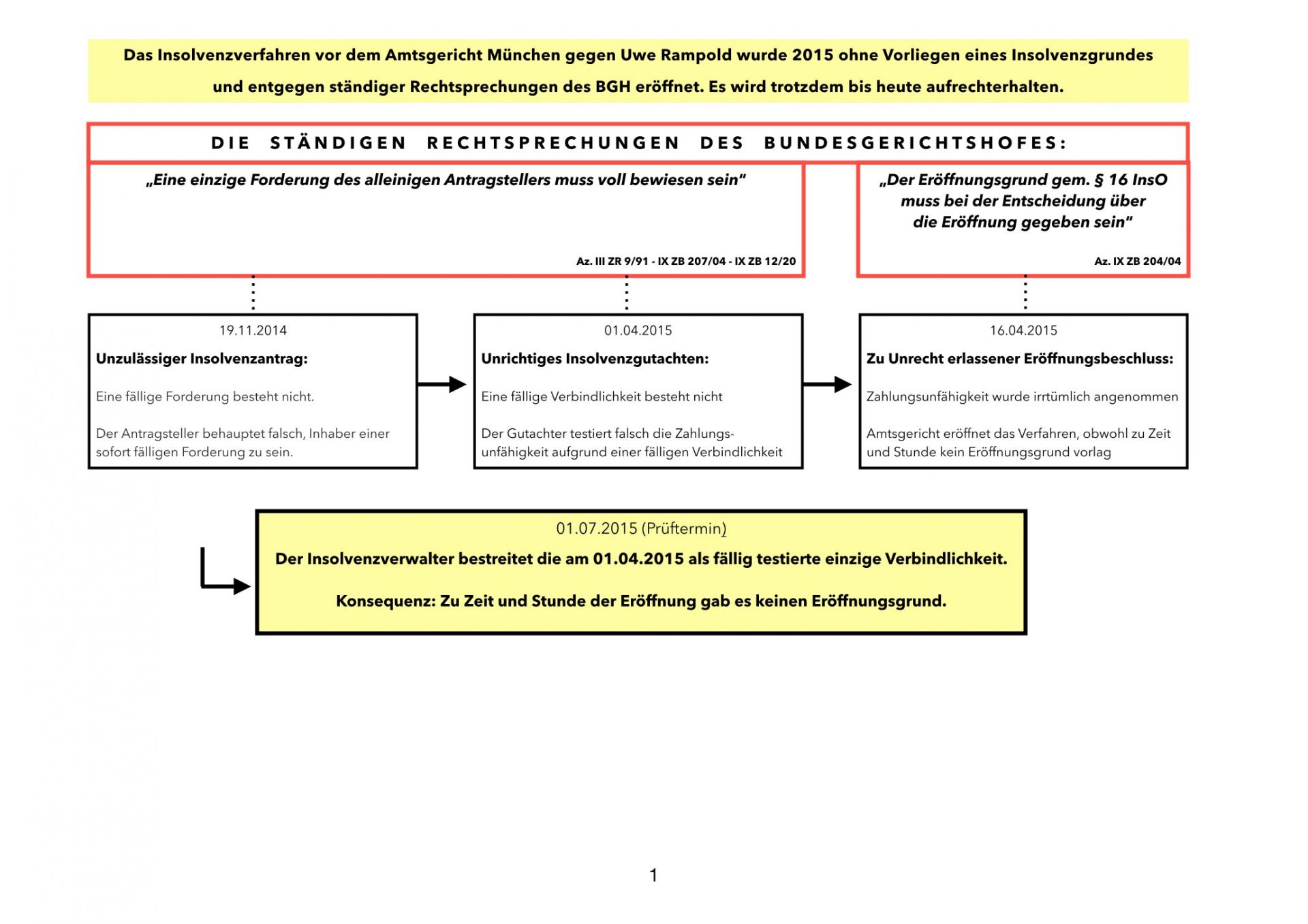
It's a economic thriller in many episodes, which could take a spectacular turn this week: On February 22, 2024, at 11:00 a.m., the insolvency case of prominent Munich entrepreneur Uwe Rampold will be heard before the Munich Regional Court, Courtroom 12, Prielmayerstraße 7.
About ten years ago, the real estate company of the veteran entrepreneur, Golden Gate GmbH, had to file for bankruptcy because planned property sales could not be implemented as planned.
The entire insolvency proceedings, involving €32 million, are highly controversial and, according to Rampold, amount to "economic crime." Among other things, the businessman accuses the insolvency administrators and the public prosecutor's office of offenses such as lack of grounds for insolvency and thus arbitrariness .
Support now comes from the Federal Constitutional Court: In a similar case, the judges in Karlsruhe recently recognized a violation of the prohibition of arbitrariness of the Basic Law – a conceivably huge slap in the face for any judge.
It will be interesting to see whether the Munich Regional Court will expose itself to accusations of arbitrariness or grant Mr. Rampold "compensation for ten lost years."
According to an article in the Süddeutsche Zeitung, Facebook, Twitter, and other social media platforms article in the Süddeutsche Zeitung , Facebook, Twitter, and other social media platforms primarily serve populist forces in spreading their messages. Meanwhile, traditional media often remain closed to political extremists, as journalists filter news according to specific quality criteria. This so-called gatekeeper function allows extreme political forces to stylize themselves as victims and to cultivate and spread this victim role outside of the established media via social media.
According to a study by the University of Warwick shows, Facebook's algorithms also enable the political attitudes of the population to become significantly more radicalized. The reason: Facebook's algorithm primarily promotes posts that trigger one of the strongest emotions—fear—in other users' timelines. Because people who are afraid want to find out more and stay on the platform longer. And that, in turn, increases Facebook's advertising revenue.
Established parties, on the other hand, have yet to fully understand how they can use social media to their advantage. So far, there have been no responses to populists.
Es kriselt gewaltig, in der Frankfurter Arbeiterwohlfahrt. Bisherige Bilanz: Geschasste Geschäftsführer in Frankfurt und Wiesbaden, entmachtete Aufsichtsgremien, Schockwellen bis ins Frankfurter Rathaus, ein Oberbürgermeister in Erklärungsnot und staatsanwaltliche Durchsuchungen.
Journalistic investigations suggest that AWO officials received outrageously high salaries on a par with those of the German chancellor over a long period of time, billed for services not rendered, and used consulting contracts to pocket public funds to which they were not entitled – in short: that they established mafia-like structures and secured them through a culture of silence – known in mafia circles as Omertà. And these structures were closely intertwined with politics and the mayor of Frankfurt, as the scandal surrounding his wife shows.
What is the position of representatives of the AWO on this issue? In a TV talk show on hr , there was no sign of any sense of injustice or insight into structural deficits or similar issues among the AWO representatives. Those involved justify, defend, and relativize. But they do not realize that in doing so, they are doing a disservice to the image of this long-established welfare association.
Like political parties, welfare organizations depend on people's trust in the integrity of the organization. How else could these associations motivate legions of volunteers to commit themselves to their cause? This self-serving mentality in welfare organizations, which also exists in the Berlin Treberhilfeand the AWO Mecklenburg-Vorpommern , is an attack on social cohesion.
The unspeakable silence from Frankfurt is providing support in this regard.
Zu Beginn richteten sich die Schülerproteste von Fridays For Future (FFF) noch gegen die Politik. Doch nun muss sich FFF neue Gegner suchen. Denn Spender und Aktive müssen immer wieder aufs Neue motiviert, aktiviert und mit Aktionen bei Laune gehalten werden. Deshalb geraten nun börsennotierte Unternehmen in den Fokus der Bewegung.
Siemens CEO Joe Kaeser attempted to wave of protests against a coal mining project in Australia, in which Siemens intends to participate by supplying technology, with a classic embrace strategy: he offered spokesperson Luisa Neubauer a seat on the supervisory board. This was followed by a storm of criticism against Kaeser and Siemens. He came under pressure to justify himself and even among shareholders are now grumbling.
Traditional crisis strategies are obviously ineffectiveagainst the force with which young people emphasize their demands on social media.
But how should companies respond when they find themselves in the public spotlight? More than just PR chatter is needed here. A credible strategy is required, enabling affected companies to break new ground. Courage and a willingness to change are needed if trust is not to be lost.
Der DIHK ist ein ganz besonderer Spitzenverband. Nicht nur, weil eine IHK-Mitgliedschaft eine Zwangs-Mitgliedschaft ist. Der DIHK ist auch deshalb besonders, weil dieser Spitzenverband sich in den letzten Jahren mehrfach lautstarkt und oft polemisch zu politischen Themen, gerne auch außerhalb seines Aufgabengebietes, zu Wort meldete. Dabei darf sich der DIHK nur und ausschließlich mit Fragen der Wirtschaft im jeweiligen Kammerbezirk befassen. Er darf aber nicht sozialpolitische oder arbeitsrechtliche Interessen wahrnehmen. Das stellte das Bundesverwaltungsgericht bereits 2016 in einem Grundsatzurteil fest. Der DIHK dar nur zu solchen Fragen Stellung nehmen, die von seiner Kammerkompetenz gedeckt sind. Und dazu gehören nicht Fragen zum Mindestlohn oder das außenpolitische Auftreten der Kanzlerin, wie die Süddeutsche Zeitung schreibt.
The Federal Administrative Court will soon have to deal again with the question of what the DIHK is allowed to do and what it is not. Back in 2016, Germany's highest administrative court ruled against the DIHK. And the prospects of a fundamental change in the legal opinion of the Leipzig judges are – to put it mildly – more than slim.
And what does the DIHK think about all this? It is pleased that "the existing legal uncertainty" will now be eliminated by the upcoming ruling.
In fact, everyone except the DIHK was clear about what the association was allowed to do and what it was not. The Leipzig court stated that the umbrella organization "repeatedly exceeds the limits of its member bodies' competence in public statements, and not just in isolated cases."
And these legal limits are a good thing. Because an umbrella organization whose individual members are compulsory members must act more sensitively than other associations. This is because members cannot express their dissatisfaction with the association's actions by resigning.
Der DIHK ist ein ganz besonderer Spitzenverband. Nicht nur, weil eine IHK-Mitgliedschaft eine Zwangs-Mitgliedschaft ist. Der DIHK ist auch deshalb besonders, weil dieser Spitzenverband sich in den letzten Jahren mehrfach lautstarkt und oft polemisch zu politischen Themen, gerne auch außerhalb seines Aufgabengebietes, zu Wort meldete. Dabei darf sich der DIHK nur und ausschließlich mit Fragen der Wirtschaft im jeweiligen Kammerbezirk befassen. Er darf aber nicht sozialpolitische oder arbeitsrechtliche Interessen wahrnehmen. Das stellte das Bundesverwaltungsgericht bereits 2016 in einem Grundsatzurteil fest. Der DIHK dar nur zu solchen Fragen Stellung nehmen, die von seiner Kammerkompetenz gedeckt sind. Und dazu gehören nicht Fragen zum Mindestlohn oder das außenpolitische Auftreten der Kanzlerin, wie die Süddeutsche Zeitung schreibt.
The Federal Administrative Court will soon have to deal again with the question of what the DIHK is allowed to do and what it is not. Back in 2016, Germany's highest administrative court ruled against the DIHK. And the prospects of a fundamental change in the legal opinion of the Leipzig judges are – to put it mildly – more than slim.
And what does the DIHK think about all this? It is pleased that "the existing legal uncertainty" will now be eliminated by the upcoming ruling.
Dabei war eigentlich allen, bis auf den DIHK klar, was der Verband darf und was nicht. Das Leipziger Gericht meinte dazu, dass der Dachverband in“…öffentliche(n) Äußerungen wiederholt und nicht nur in Ausreißer-Fällen die Kompetenzgrenzen seiner Mitgliedskörperschaften überschreitet“.
Und diese gesetzlichen Grenzen sind auch gut so. Denn ein Spitzenverband, dessen Einzel-Mitglieder Zwangsmitglieder sind, muss sensibler agieren, als andere Verbände. Denn Mitglieder können ihren Unmut über cdas Vorgehen des Verbands gerade nicht durch ihren Austritt kundtun.
The ClimateSailor project team is pleased to present our project treatment today. The German and English versions provide all the information about the project, who is behind it, what it is about, and what the project goals are.
Here are the treatments:
Heute ist es schon wieder passiert. Schon wieder hat ein Musiker eine sehr teure Geige im Zug liegen lassen. Diesmal in London. Diesmal ein 300 Jahre altes Instrument im Wert von mehreren 100.0000 Euro. Damit ist der vergessliche Geiger kein Einzelfall. Denn schon die Jahre davor wurden fast regelmäßig wertvolle Geigen in Zügen vergessen. Darunter eine Stradivari und ein mehrere Millionen US-Dollar teures Instrument eines Stradivari-Schülers.
Bizarre. But how is it that musicians who travel with instruments worth up to several million euros simply leave these masterpieces of violin making lying around? And why always on trains? Why not in supermarkets, on planes, or anywhere else?
We venture to create a psychological profile of these special individuals: gifted artists, owners of instruments worth as much as a house in Munich, and with a penchant for train travel. We do this without resorting to Rorschach tests or other analyses. We venture an analysis based solely on stereotypes and prejudices:
Artists are often described as spiritual people, as transfigured and "not of this world." Let's assume that's true. Because this description of musicians who live little in the here and now fits with what we have observed: the accumulation of forgotten million-dollar violins on trains.
And the train, as the most contemplative means of transportation of our time, also fits into this picture: while the artist's mind is preoccupied with solos, suites, and sonatas, musicians do not have to worry about traffic jams or routes. Sitting on the train, they can retreat completely into a world of sounds and harmonies.
Everything would be fine if it weren't for the inevitable disembarking from the train.
But thankfully, there are many honest finders. Some of these valuable instruments that had been left behind were reported to the police or train staff. And so we can continue to be enchanted by wonderfully spiritual artists who help us get off our train with their music and open a window to another world.
Good morning. A glance at today's newspaper leaves us amazed. Munich city councilor Johann Sauerer is switching from the CSU to the ÖDP. So far, so normal in Munich. But in a report in the Süddeutsche Zeitung , there is talk of a transport revolution and environmental policy.
We don't remember Mr. Sauerer being so environmentally conscious. Wasn't it Mr. Sauerer who demanded the demanded the construction of the southern ring road in Munich? And doesn't this Autobahn-Südring threaten the nature in the Isar Valley that is worthy of protection, as well as the fresh air corridor in the south of Munich?
Political positions are volatile. That's a good thing, because it allows people to evolve. But when it comes to fundamental beliefs, there is a risk of losing credibility. Either my heart belongs to promoting car trafficor to protecting the environment. At least, that's how the public sees it. A change in such fundamental values quickly leads to disillusionment with politics if it is not properly explained.
Achtung – jetzt folgt der Werbeblock:
Falls ein solcher Wechsel von politischen Grunüberzeugungen doch gemacht wird, weil zum Beispiel ein Erkenntnisprozeß stattfand, dann muss dies glaubwürdig und umfassend erklärt werden! Man muss die Entwicklung von Positionen kommunizieren, ausführen, erläutern. Gerne beraten wir dabei – sozusagen politisches Change-Management.
Here, it happened in a clumsy and implausible way. We are surprised and first take a sip of our beloved morning coffee.
But our amazement does not end there: in a commentary in today's SZ , there is talk of token citizen communication in planned infrastructure projects. There are still municipalities that adhere to the legal requirements for planned construction and infrastructure projects.
But that is no longer enough! Citizens want to have a say, exert influence, and participate in decision-making.
This is consistent with our experience from citizen communication.
And the good news for all mayors and treasurers:
If such an infrastructure project is accompanied by professional communication from the outset and the local authority is prepared to engage with its citizens on the substance of the issue, experience shows that this is cheaper than pushing the project through amid controversy, in court, and against the will of the citizens. Because today, citizens are taking decision-making power into their own hands.
Particularly pleasing:
The Lars Rademacher and Alexander Schmitt-Geiger , anthology on litigation PR serves as a source for the study in numerous places.
We are delighted, because in science today, it is not a given that a publication will remain significant for several years. This speaks for solid work and a good concept.
When we ordinary users arrive in a foreign city, many of us google where to eat well or sleep comfortably, what cultural attractions are on offer, or what the phone number of the local taxi company is. Depending on where we are, our search may take us to a service page run by the city or municipal administration or one of its companies. And voilà, there we find the information we are looking for. However, such services offered by cities and municipalities have been the subject of legal disputes for some time.
On the one hand, there are the newspaper publishers and media companies of the local daily newspapers. They essentially invoke the fundamental right of freedom of the press. More specifically, they argue that the press must remain free from government influence. They also cite the law against unfair competition, which states that a municipality is engaging in private enterprise when it sells advertisements. And municipalities are not allowed to do that. Cities and municipalities should only be allowed to publish in designated official gazettes in order to ensure a clear separation between government statements and the free press.
On the other hand, there are cities and municipalities. They take the view that cities and municipalities are indeed allowed to publish service information and also operate service portals for this purpose. This is because the portals do not involve press reporting, which is reserved for the press.
But actually, the dispute is not about the noble cause of freedom of the press, but about the filthy lucre of money. Publishing houses want to secure the advertising revenue they generate from selling ads. And cities and municipalities want to conduct public relations work in a contemporary manner on the Internet and provide information in an appealing way.
And as is so often the case, we believe that the solution lies in consensus and cooperation. Why don't cities and municipalities team up with publishers to run such a portal together, strictly separating editorial content from service information and sharing the advertising revenue? This would bring in money for both the economically beleaguered press and the public sector. And people would have attractive information portals plus news from their region. A classic win-win situation.
What a start to the week: our dear friend and project partner, Berlin-based filmmaker Christian Slezak, has now been working on our ClimateSailor project in Gibraltar for almost two weeks now. His goal: to sail on a German skipper's yacht through the Strait of Gibraltar to the Canary Islands and then on to the Caribbean with the trade winds. To gain nautical miles and sailing experience.
Today he is returning to Berlin. From Gibraltar, no less. What happened?
At first, the skipper didn't like the wind – he only wants to cross the strait with an easterly wind, i.e., with a tailwind. Well, that's understandable: tacking against the wind in a busy sea area with a crew member who is not yet experienced is no picnic. But it is doable – especially with winds of mostly only 10 knots, i.e., a light breeze.
Then the sailmaker didn't carry out a repair to his satisfaction. So, more waiting and having the sailmaker redo the work. Why couldn't he have sorted that out before advertising this trip? But never mind – wait. Gibraltar is quite nice too.
But what was the skipper thinking yesterday? He'd rather sail alone! We're very surprised here in Munich. And we're now asking ourselves: Is sailing really the right thing for someone like him? Or wouldn't golf be better, because it involves fewer risks? Although, unfortunately, you can't really call what this skipper does sailing, because he prefers to use the motor.
And that's a no-go for us, as we want to combine a film project about the effects of climate change with sailing, a climate-friendly form of travel. Not to mention the fact that a motorized sailing yacht makes every sailor shudder.
And once again, it was due to poor communication. A fearful skipper who doesn't say what he actually wants. So we turn away, shaking our heads, wish the skipper the courage to find his true course in life, and go and get ourselves a coffee.
Let's see what else the week has in store. On Wednesday, we're heading to the Oktoberfest.
We look forward to engaging in productive discussions with political figures over drinks and pretzels.
Welcome to our agency's blog. Here we write about what moves us professionally every day: crisis communication, litigation PR, lobbying & public affairs, cybercrime... But also bizarre, funny, and thought-provoking stories from our everyday agency life.
Sometimes tongue-in-cheek, sometimes cautious, rarely diplomatic, but always interesting.